
When we left Vermont in early April, snow still hung onto the northern slopes of forests and the pastures were just turning green. We returned to Virginia, a few degrees of latitude south, but it felt like we’d flipped hemispheres. High 80’s and humid, a morning chorus of a dozen birdsongs, and our neglected garden a riot of colors.
The joy of the second year.
Our first year in the garden held the excitement of a new relationship. Several thousand square feet of virgin lawn, our imaginations running wild as we knelt in the dirt and tore out the grass. That first spring was a labor of moving dirt from one place to another, sifting out grass and violet roots, working in many cubic yards of compost, and spreading many more cubic yards of mulch. It was incubating hundreds of seedlings of tomatoes, peppers, eggplant, kale, collards, broccoli, chard, basil, cilantro, and tenderly patting each one into the earth.
The second year, our relationship blossoms and matures.
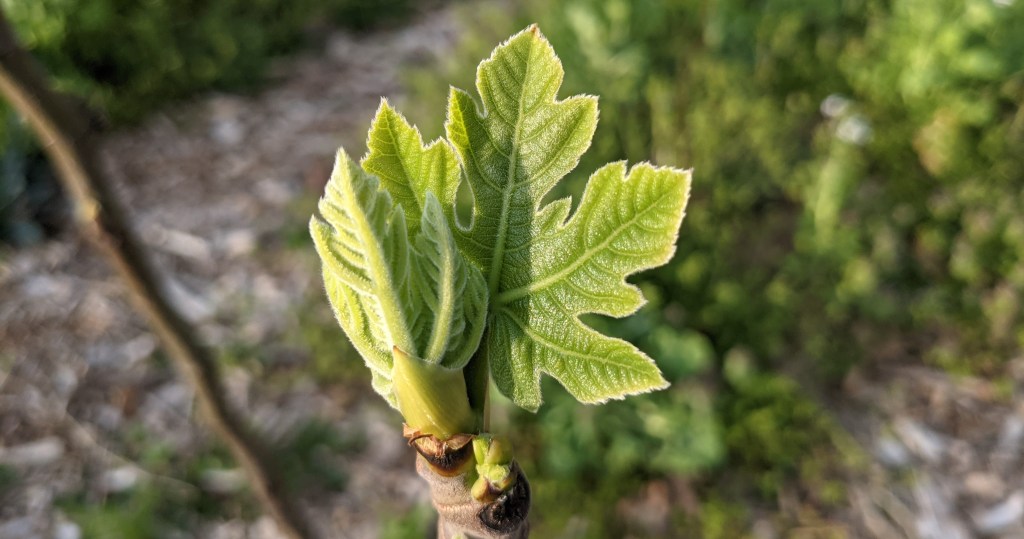
After a couple months away, the garden greeted us with baby fig leaves unfurling from their buds; tulips we’d forgotten we’d planted; blossoms lining the goumi berry branches; little strawberry flowers covering the beds; red and green lettuces, kales and kohlrabi taking over after surviving winter; the banana rising from its old stalk. Even the previously-troublesome violets colored the landscape with purple patches, in visual harmony with the yellow dandelions, and I forgot why I’d ever hated them.

Our first year, we let our annuals progress through their full cycle from leaf to flower to seed. I’d made it to my thirties without knowing what my food looked like and I was curious to know how carrots reproduce. Mid-summer, we watched the carrot tops leap a few feet taller in the span of a couple weeks. Puffs of white flowers looking like upside-down umbrellas towered over their dainty leaves. Kale, radicchio, radishes, arugula, collards, all barely recognizable from their younger selves, all with mustardy flowers of yellow, blue, white, purple, offering us a spicy taste during our garden wanderings. Bees and other pollinators hopped through the foray of flowers and birds swayed on the flimsy stalks, pecking at the seeds. Late autumn, I shook the seed heads around the garden.
We did the same with any tree seeds we came across. Fruits, nuts. Pawpaws I’d picked on a trail, acorns found on a walk. Last fall, I found a baby avocado tree at the edge of a bed. This spring, a baby persimmon, baby oaks, redbuds, mulberries, an almond tree.
This second year, the line between weed and not-weed has blurred beyond any important distinction. If a weed is something growing that wasn’t intentionally planted, most everything in our garden this year is technically a weed. Those weeds have topped our tacos (cilantro), spiced up our salads with greens (chickweed), tartness (sorrel, dandelion greens), and colors (red amaranth leaves pictured in the header image, carrots), decorated our front walk (poppies, coreopsis, sunflowers), and promised us sweetness for our future (tomatoes).

Such a garden probably isn’t what you picture when you think of vegetable rows or tidy lines of flowers decorating a façade. I’ve taken to calling it “designed disorder.” Or “structured chaos.” The only way we’ve noticed the baby trees and volunteer cilantro is by taking a laissez-faire approach with any unknown green thing popping up in beds of newly transplanted kales.

This second year, the perennials have established themselves. Trees that struggled through last year, barely hanging on through the heat, now spin out branches in every direction. Blackberries transplanted from a few roots now jumble into huge bushes obscuring our chain link fence, hundreds of white flowers opening skyward. What started as a couple strawberry plants now covers entire beds. The elderberries pop out their white bundles of flowers and two-month-old shoots are already taller than us. Our early season abundance makes it easy to dream of linking one fresh fruit to the next from April through November. From strawberries to goumi berries to juneberries to cherries to mulberries to wineberries to blackberries to blueberries to figs to hardy kiwis to pawpaws to pears and apples and persimmons.
Then there are our good friends that died back last year but are coming back more vigorous than ever this year. Like ol’ ‘Nana the banana. Like all the herbs for iced herbal tea on those hot porch evenings, like anise hyssop, mountain mint, pineapple mint, chocolate mint, lemon balm, yarrow, and fennel. And rounding out the garden are the perennials that never quite went away, flowering magnificently this spring. The rhubarb, sage, oregano, thyme, lavender, lovage, asparagus, overwintering onions and garlic.

I see our role this second year not so much as its overseer. More its companion. The first year, we did shape it to our vision, tearing up grass, shipping in nutrients and new species. But the second year and beyond will be about letting the new ecosystem shape itself, with a few nudges here and there to keep us and our neighbors well fed.
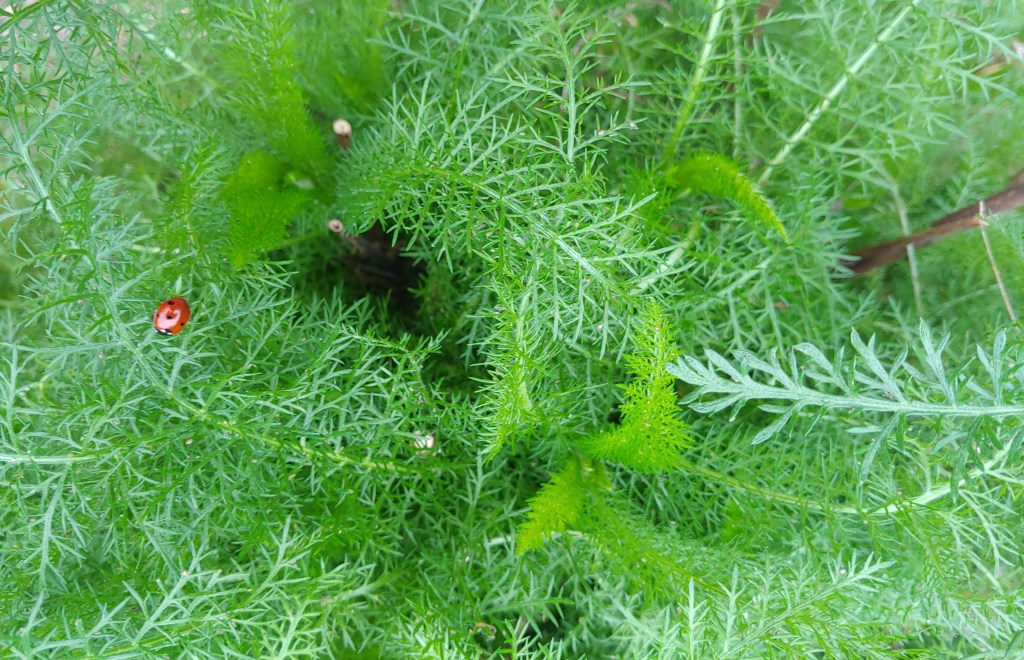
One example — around this time last year, every few days Lauren would tediously pick through our rows of juvenile tomato plants to save them from clouds of aphids. This second year, we’ve noticed way more ladybug and ladybug larvae and far fewer aphids. In a functioning ecosystem, an overabundance of one species is quickly rebalanced one way or another. It’s not to say that we’re free of competitors for food. Surely some of our squash or watermelon or peppers or beans won’t make it to where we’d harvest it. But it’ll work itself out one way or another. It’s been a privilege to be one small part of the garden this second year.
The first year, relationships burn bright with the sense of limitless possibilities. The second year, the nuance of flavor deepens.
 Berries and Figs
It has been amazing to see the transformation of your front and back yards into such a diverse and beautiful food forest! ❤️🍓🫐🥬🌶🥕🌽🧄🌻
LikeLike